When Art and Design Collide: Signac, Havard, and Shared…
Miguel Fernández ·
Listen to this article~4 min
Explore the unexpected link between Paul Signac's anarchist-inspired paintings of bourgeois interiors and Henry Havard's mainstream design guides. Discover how shared scientific principles bridged a vast ideological divide.
Let's talk about something that might seem like a contradiction at first glance. Picture this: Paul Signac, a Neo-Impressionist painter with strong anarchist leanings, creating these beautiful, detailed paintings of bourgeois interiors. Then, there's Henry Havard, writing the rulebooks on interior design for that same emerging consumer society. On the surface, they're coming from completely different worlds, right?
But here's the fascinating part. When you really look at Signac's paintings—*Salle à manger* (1886–1887) and *Un Dimanche* (1888–1890)—and then read Havard's influential books like *L'Art dans la maison* (1884) and *La Décoration* (1892), you start to see these unexpected threads connecting them. It's like they were speaking different political languages but using the same visual grammar.
### The Ideological Divide
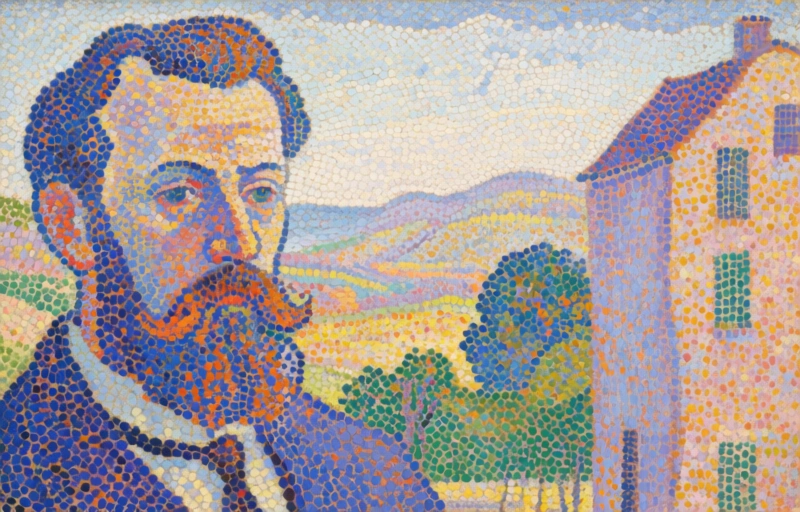
Signac's approach to art wasn't just about technique. It was deeply wrapped up in anarchist thought. He saw his pointillist style, that method of using tiny dots of pure color, as a kind of scientific and social experiment. It was about creating harmony from individual parts, a metaphor that resonated with his political ideals.
Havard, on the other hand, was writing for a new class of homeowners. His books were guides for a society learning how to consume, how to furnish a home to show status and taste. He was aligned with industrial progress and the growing French economy. So we have the radical artist and the practical decorator. Yet, their paths cross in the most surprising way.
### A Common Foundation in Science
Despite their different end goals, both men seemed to be drinking from the same well of scientific and theoretical ideas. This shared foundation becomes clear when you break down their work. It shows up in two main areas:
- **Furniture and Space:** The way objects are chosen and arranged in a room. There's a thoughtfulness to the placement that goes beyond mere decoration.
- **Color and Line Theory:** This is where it gets really interesting. Both were deeply concerned with how color and line affect a space and, more importantly, the person in it.
They were both playing with psychology through design, whether it was on a canvas or in a living room. Havard gave advice on which colors promoted calm or energy. Signac used color combinations to create specific moods and optical effects. They shared this belief that you could engineer an experience, that you could influence feeling and perception through careful application of visual rules.
> "A shared confidence in progress through science linked these divergent ideologies."
That quote really sums it up. In a time of rapid change, both the anarchist and the capitalist consultant looked to science as a reliable guide. For Signac, it was the science of optics and color theory proving his artistic method. For Havard, it was the science of industry, production, and even early psychology informing his design principles.
The similarities are striking when you lay them side-by-side. It makes you wonder how often opposing sides are actually building with the same tools. They just have different blueprints. This connection between Signac's painted rooms and Havard's real-world advice shows us that ideas about space, color, and human response were in the air. They were part of a larger conversation about modern life.
So, what can we take from this? Maybe it's that inspiration and influence are messy. They don't respect ideological boundaries. A radical painting and a mainstream design manual can end up in dialogue, revealing the common hopes and anxieties of an era. It reminds us to look for the connections, even in the places we least expect them.