Art and Anarchy: How Science United Two French Visions
Miguel Fernández ·
Listen to this article~5 min
Discover how anarchist painter Paul Signac and interior design guru Henry Havard used the same scientific theories for completely opposite goals - one to reshape society, the other to sell furniture.
Have you ever noticed how two completely opposite ideas can sometimes use the same playbook? That's exactly what happened in late 19th-century France. On one side, you had Paul Signac, a Neo-Impressionist painter with anarchist leanings. On the other, Henry Havard, a champion of bourgeois interior design who wrote the rulebooks for the upwardly mobile. Their goals couldn't have been more different, yet they both turned to the same scientific theories to guide their work. Let's dig into this fascinating collision of art, politics, and home decor.
### The Two Worlds of Paul Signac and Henry Havard
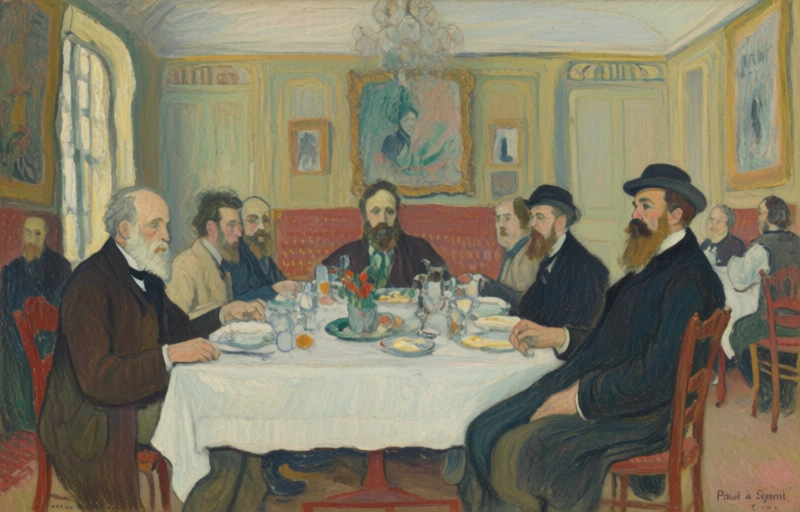
Paul Signac wasn't just any painter. He was a committed anarchist who believed art could help reshape society. His paintings "Salle a manger" (1886-1887) and "Un Dimanche" (1888-1890) show quiet, everyday scenes of middle-class life. But look closer, and you'll see his radical ideas hiding in plain sight. He used tiny, separate dots of color - the pointillist technique - to create harmony and balance. For him, that was a political statement: a vision of a world where everyone worked together without a central authority.
Henry Havard was the exact opposite. He wrote books like "L'Art dans la maison" (1884) and "La Decoration" (1892), which taught people how to furnish their homes to show off their social status. He was all about consumption - buying the right furniture, choosing the perfect wallpaper, and arranging everything to impress visitors. His advice was tailor-made for the emerging consumer society, where what you owned said who you were.
### The Surprising Common Ground: Science
Here's where it gets weird. Despite their totally different worldviews, both Signac and Havard relied on the same scientific sources to back up their ideas. They both believed that progress through science could solve problems - even if those problems were completely different.
For Signac, science was a way to create a more perfect, harmonious art that could inspire a better society. He studied color theory and optical effects to make his paintings feel alive and balanced. For Havard, science was a tool to sell more stuff. He used similar research to recommend specific colors and furniture arrangements that would make people feel comfortable, impressed, or even a little bit envious.
### How They Applied the Same Theories
Let's break down what they actually did with all that science. It's pretty eye-opening:
- **Color choices:** Both men believed certain colors could trigger specific emotions. Signac used warm tones to create a sense of peace and unity. Havard suggested warm colors for dining rooms to stimulate appetite and conversation.
- **Line and arrangement:** Signac carefully placed every dot to guide the viewer's eye around the canvas. Havard advised homeowners to arrange furniture in flowing lines that made a room feel larger and more welcoming.
- **Psychological impact:** Both were convinced that their work could change how people felt. Signac wanted to inspire a new way of thinking. Havard just wanted to sell curtains. But the underlying belief was the same: the right visual choices can shape your mood.
> "A shared confidence in progress through science linked divergent ideologies." - This quote from the original study nails it. It doesn't matter if you're an anarchist painter or a capitalist decorator - when you believe science has the answers, you end up using the same tools.
### Why This Still Matters Today
Think about your own life. How often do you see completely opposite groups using the same data or technology to push their agendas? Political campaigns use the same social media algorithms. Health gurus and junk food companies both cite nutritional studies. It's the same pattern: when everyone believes in the power of science, the science itself becomes neutral, even if the goals aren't.
So next time you walk into a beautifully decorated room or look at a painting, remember: the colors and lines around you are more than just pretty. They're the result of a century-old debate about what makes a good life - and whether that life is built on consumption or community.