Art & Anarchy: How Paul Signac's Paintings Reveal a Shared Design Science
Miguel Fernández ·
Listen to this article~3 min
Explore the surprising link between Paul Signac's anarchist paintings and Henry Havard's bourgeois design guides. Discover how color, line, and a shared faith in science connected two opposing worlds.
Let's talk about something that seems like a total contradiction. On one side, you've got Paul Signac, a Neo-Impressionist painter deeply rooted in anarchist ideology. On the other, you've got Henry Havard, an author writing the rulebook for bourgeois interior design in a booming consumer society. They shouldn't have anything in common, right?
Well, that's where it gets fascinating. A close look at Signac's paintings of domestic life—*Salle à manger* (1886–1887) and *Un Dimanche* (1888–1890)—alongside Havard's design manuals reveals a surprising connection. It turns out these two very different minds were drawing from the same well of scientific theory.
### The Unlikely Pair: Signac and Havard
Signac wasn't just painting pretty rooms. His work was a political statement, critiquing the bourgeois world from within. Havard, however, was its cheerleader. His books, *L'Art dans la maison* (1884) and *La Décoration* (1892), were the ultimate guides for creating a stylish, modern home that showed off your status.
You'd think their goals were worlds apart. One wanted to subtly undermine the system through art; the other wanted to help people buy the right sofa. Yet, when you strip away the ideology, their methods start to look eerily similar. They both believed in a systematic, almost scientific approach to visual harmony.
### The Common Ground: Color, Line, and Psychology
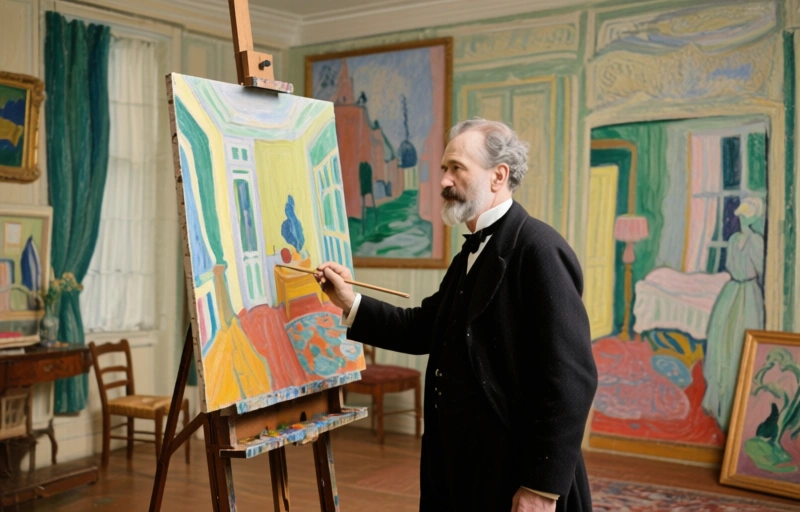
This is where the magic happens. Both Signac in his brushstrokes and Havard in his decorating advice focused intensely on two things: the application of color and the arrangement of lines. They weren't just making things look nice. They were trying to influence mood and perception.
Think about it like this. Havard would give rules on which colors to use in a dining room to stimulate conversation. Signac, using his pointillist technique, would carefully place complementary colors side-by-side to create a vibrating, energetic feel. They were both architects of atmosphere, using a shared visual language.
Here’s what they both cared about:
- The psychological impact of color choices
- The flow and arrangement of furniture and lines within a space
- Creating a specific, intended experience for the viewer or occupant
- A belief that design could guide emotion and behavior
It’s a powerful reminder that sometimes the tools we use are more important than the reasons we give for using them. A shared confidence in progress through science linked these divergent ideologies.
### Why This Matters for Design Today
So what can we, especially professionals thinking about space and aesthetics, learn from this? It shows that good design principles often transcend trends and even politics. The fundamentals of balance, color theory, and spatial psychology are timeless.
Whether you're creating a painting or planning a living room layout, you're engaging with the same core concepts of human perception. Signac and Havard, despite their opposing worldviews, both understood that the environment we create has a profound effect on us. That’s a lesson that hasn’t aged a day. It pushes us to look beyond the surface and find the common threads in even the most unlikely places.